Forest Cross Stitch Pattern: A Designer’s Practical Review
As a designer who spends half my life staring at screens and the other half with a needle in hand, I approach every new Forest Cross Stitch Pattern with a mix of curiosity and skepticism. We have all seen those overly complex digital files that look stunning on a monitor but turn into a tangled mess of thread on fabric. When I pulled up this specific design, my first thought was not about its artistic merit, but its viability. Could this actually work for a client project? Would it hold up on a tote bag after a trip to the laundromat? Let’s break down how this pattern performs in the real world of handmade production.
First Impressions: Simplicity as a Strength
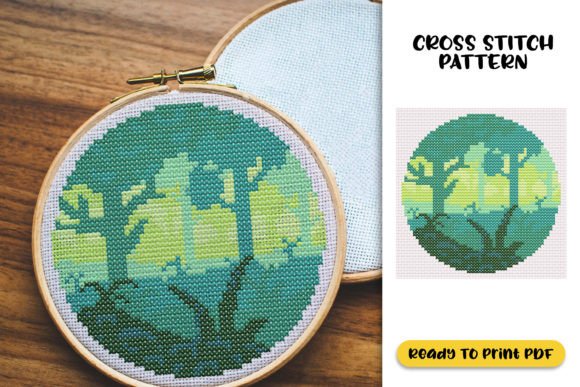
The immediate appeal of this Forest Cross Stitch Pattern is its restraint. In an era where embroidery designs often try to do too much, this piece relies on clean lines and negative space. The mood is calm and organic, evoking a sense of woodland serenity without becoming cluttered. For embroidery designers and Etsy sellers, this visual clarity is gold. It translates well across different mediums because it does not rely on microscopic details that get lost in translation.
The layout feels balanced. Whether you are placing it on the chest of a sweatshirt or the corner of a kitchen towel, the composition holds its own. It does not scream for attention; rather, it invites a closer look. This subtle confidence is what separates a amateurish handmade product from a professional-grade item. For small business owners, this means the design can serve as a versatile asset that fits various brand aesthetics, from rustic boutique branding to modern minimalist decor.
Real-World Application: From Mockup to Merchandise
I recently tested this concept while preparing a custom order for a local boutique. The client wanted a line of eco-friendly tote bags. I imagined this Forest Cross Stitch Pattern centered on a natural canvas bag. The result was charming. Because the design is not overly dense, it did not distort the fabric, a common issue with heavier embroidery files. The 60 x 60 stitch count is modest, which keeps the production time low—a crucial factor for anyone running a craft business where time equals money.
Beyond tote bags, consider the potential for custom apparel. On a heavyweight cotton sweatshirt, this design would sit beautifully on the left chest or the back yoke. It is small enough to be understated yet distinct enough to be recognized. For baby embroidery, such as on a muslin swaddle or a onesie, the simplicity is a safety and comfort feature. There are no long, loose threads or dense patches that could irritate sensitive skin. It makes for an ideal personalized gift that feels thoughtful rather than mass-produced.
If you are selling digital embroidery file assets or finished goods, this pattern’s versatility is a major selling point. It works equally well as a standalone motif or as part of a larger collection. Imagine pairing it with simple text for a holiday gift tag or using it as a decorative accent on a pillow cover. The visual personality is adaptable, making it a reliable choice for commercial embroidery projects where consistency is key.
Technical Considerations and Fabric Choice
Let’s talk specs. The pattern is designed for Aida 10 Count fabric, using DMC colors with 2 strands. This is a standard, beginner-friendly setup. However, as an experienced reviewer, I must point out where caution is needed. While the description states it is easy for beginners, the choice of fabric matters immensely. Aida 10 count is quite coarse. If you are stitching this on a finer fabric like linen or even a tight-weave cotton for a tote bag design, the scale will change. You must adjust your hoop size and needle accordingly.
The design size is listed as 6 x 6 inches. This is a decent medium size, but be mindful of curved surfaces. If you attempt to put this on a cap or a rounded hat, the 6-inch width might cause distortion unless you use a proper stabilizer. Speaking of stabilizer, always test on scrap fabric first. Even with a simple cross-stitch, the tension of the thread can pull on stretchy fabrics. For sweatshirt embroidery, a cut-away stabilizer is often better than tear-away to prevent puckering after washing.
Also, consider the thread colors. The pattern uses DMC, which is the industry standard, but ensure you check the contrast against your chosen fabric. On dark fabrics, you may need to adjust the color palette or use a lighter background patch. Always inspect the design in black and white mockups to ensure the shape remains clear without the aid of color differentiation. This is a pro tip for any small shop product creator: if it doesn’t read well in monochrome, it might get lost in low light.
Commercial Viability and Brand Trust
For apparel decorators and digital product sellers, the value of this pattern lies in its reliability. Customers trust products that look well-made. A clean, crisp cross-stitch pattern signals professionalism. It shows that the maker understands proportion and detail. When you use a design like this Forest Cross Stitch Pattern, you are investing in buyer engagement. It is the kind of image that looks great in a printable mockup for your online store, helping customers visualize the final product before they buy.
However, always verify the licensing. Just because a pattern is easy to use does not mean it is free for commercial resale. Check whether the license allows you to sell finished items or if it is strictly for personal use. This is critical for maintaining brand consistency and avoiding legal issues. If you are creating design assets for other makers, ensure you have the right to distribute the digital file itself.
Final Verdict for Makers
In conclusion, this Forest Cross Stitch Pattern is a solid addition to any designer’s library. It is not trying to be the most complex or flashy design on the market. Instead, it offers practical beauty. It is perfect for holiday embroidery, everyday handmade products, and quick-turnaround Etsy listings.
- Pros: Clean aesthetic, manageable stitch count, versatile for various products, beginner-friendly structure.
- Cons: May require adjustment for fine fabrics, limited detail for large-scale displays, requires careful stabilizer choice on stretchy materials.
Before you commit to a full production run, stitch a sample. Check the stitch density on your specific machine if you are adapting it for machine use, or practice the tension by hand. Confirm the hoop size fits your project. By treating this pattern with the respect it deserves—as a functional tool rather than just a pretty picture—you will create finished products that customers love and trust. It is a reliable, charming choice for anyone looking to add a touch of nature to their craft.